Triple Sloths Build
Adding life to the Eurorack case with a nonlinear voltage source.

To begin with, I apologize for posting out of order. Since we last talked, I built two Moritz Klein envelope generators and have not published build blogs about them. I promise I will get around to writing about those builds, but I'm just really excited about my latest project, a version of the Triple Sloth module from Nonlinear Circuits. The analog Sloth circuit is a source of slow, chaotic modulation that is very well suited to drones and ambient music. I discovered the module while browsing through Eddy Bergman's DIY project list. He built a Triple Sloth on strip board (wow) with one Sloth circuit per board. In addition to instructions and layouts, Eddy's build page also includes a bunch of oscilloscope screen captures which really give you a great idea of what the Sloths are doing.
Each Sloth has three outputs: X, Y, and Z (which is inverted X), and depending on the build, can cycle through a voltage pattern in anywhere between 15 seconds to 40 minutes. The Triple Sloth is a 10 hp module with three circuits:
- Torpor: 15-30 seconds per cycle
- Apathy: 30-60 seconds per cycle
- Inertia: 30-40 minutes per cycle
The circuit also includes two outputs which send the sum of the positive voltages and the sum of the negative voltages from all three Sloths.
Nonlinear Circuits sells a panel + PCB kit for the module, and frankly, if you're just interested in racking up this awesome modulation source, you should just buy and build their kit. Sloths was probably the most complex build I've done so far, and several of the components are difficult to find in through-hole packaging. But I'm in it for the design challenge as well as the build, so I decided to create a version of Sloths that could be built on my preferred DIY platform, the N8 prototype boards.
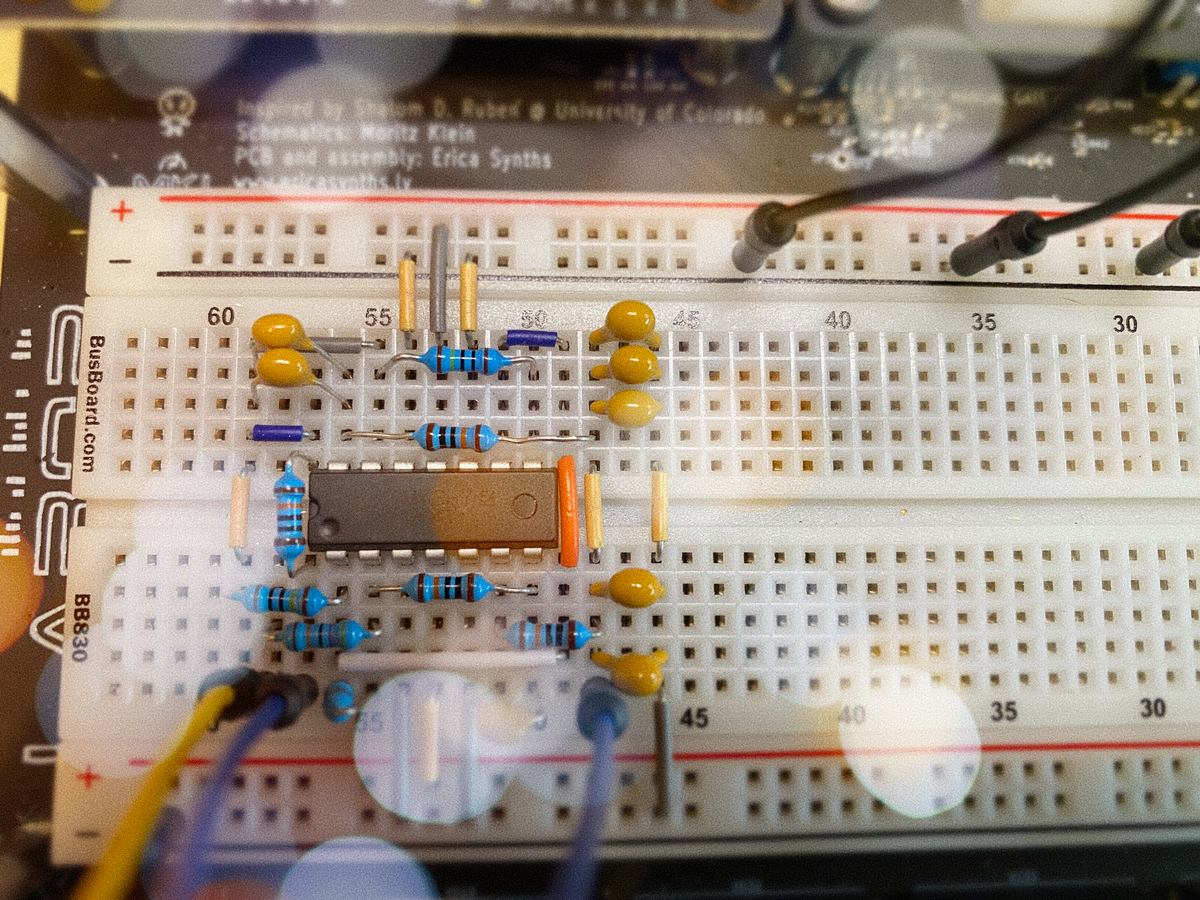
I started by prototyping the Torpor circuit on my MKI+ES Labor board. While I don't completely understand how the circuit works (yet), it's actually not that complex: just a few op-amps, some capacitors, and a few resistors. Here's a video of the prototype with the X and Y outputs plugged into the Labor scope in Lissajous mode. Take a look at how those two voltage sources circle around an "attractor", as Nonlinear puts it, then move down to a second attractor in the negative voltage space:
Torpor Sloth outputting semi-chaotic voltage from X and Y.
I created the layout shown below using the web-based N8 module designer. The main difference between this circuit and the commercial version is that I left out the LEDs and the buffer op-amps that drive them because I just didn't have enough space on the panel.
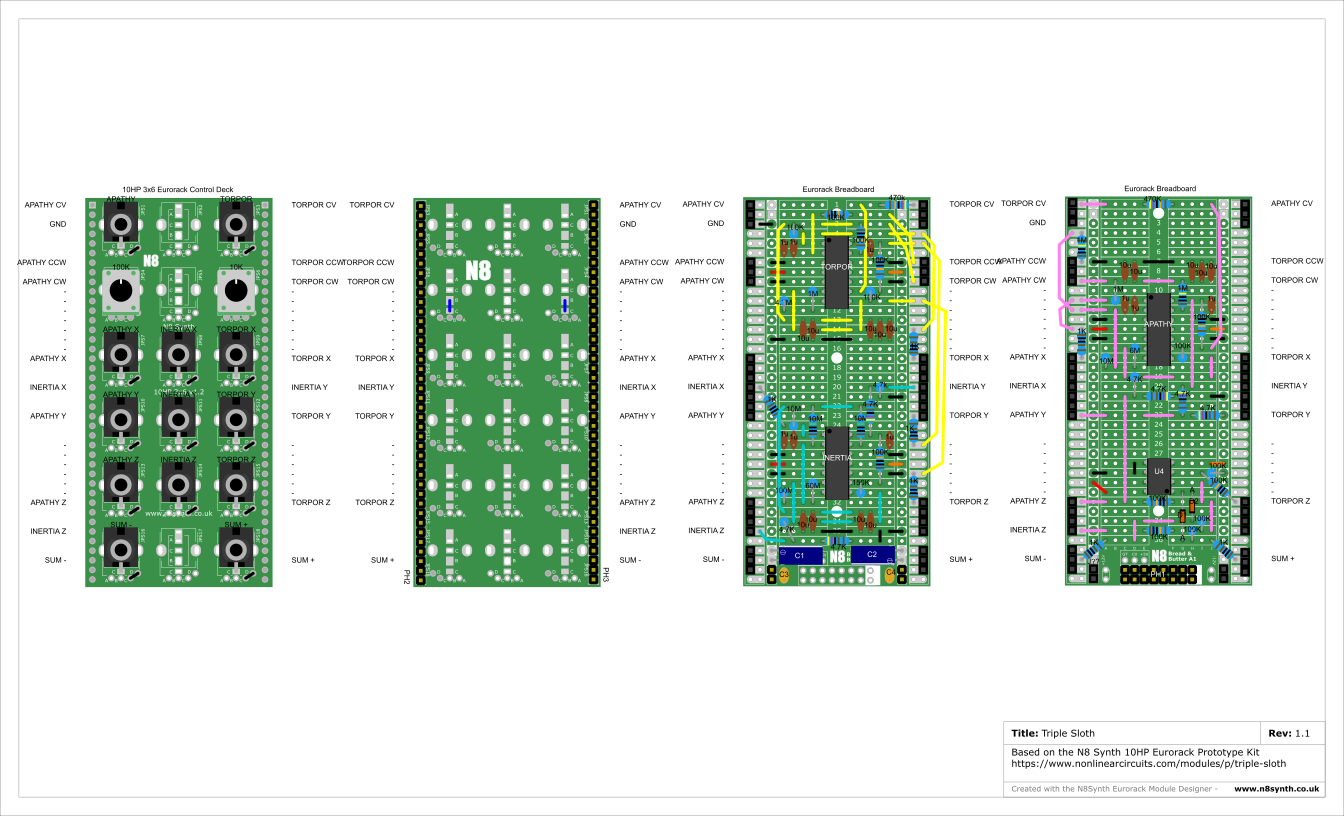
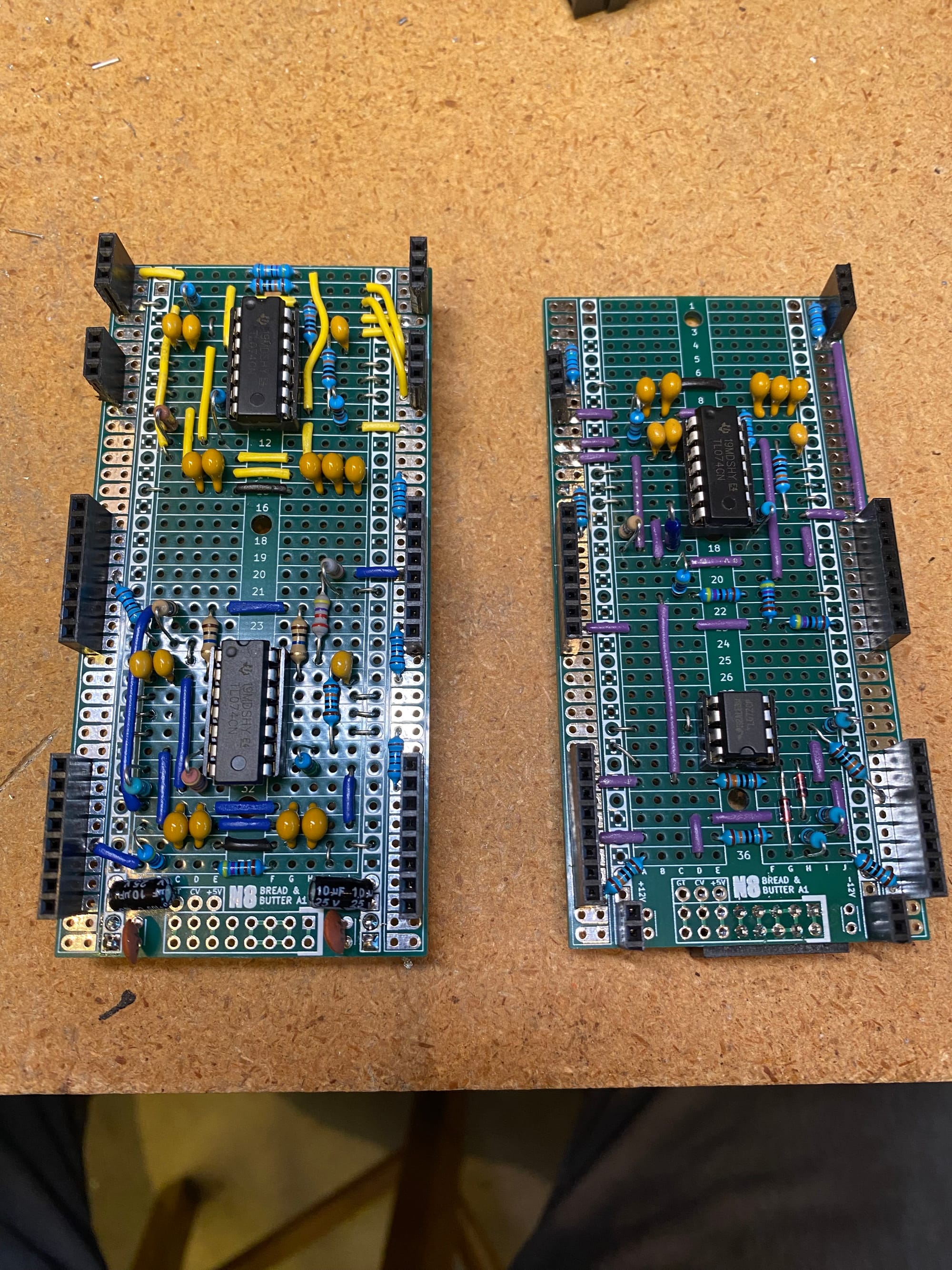
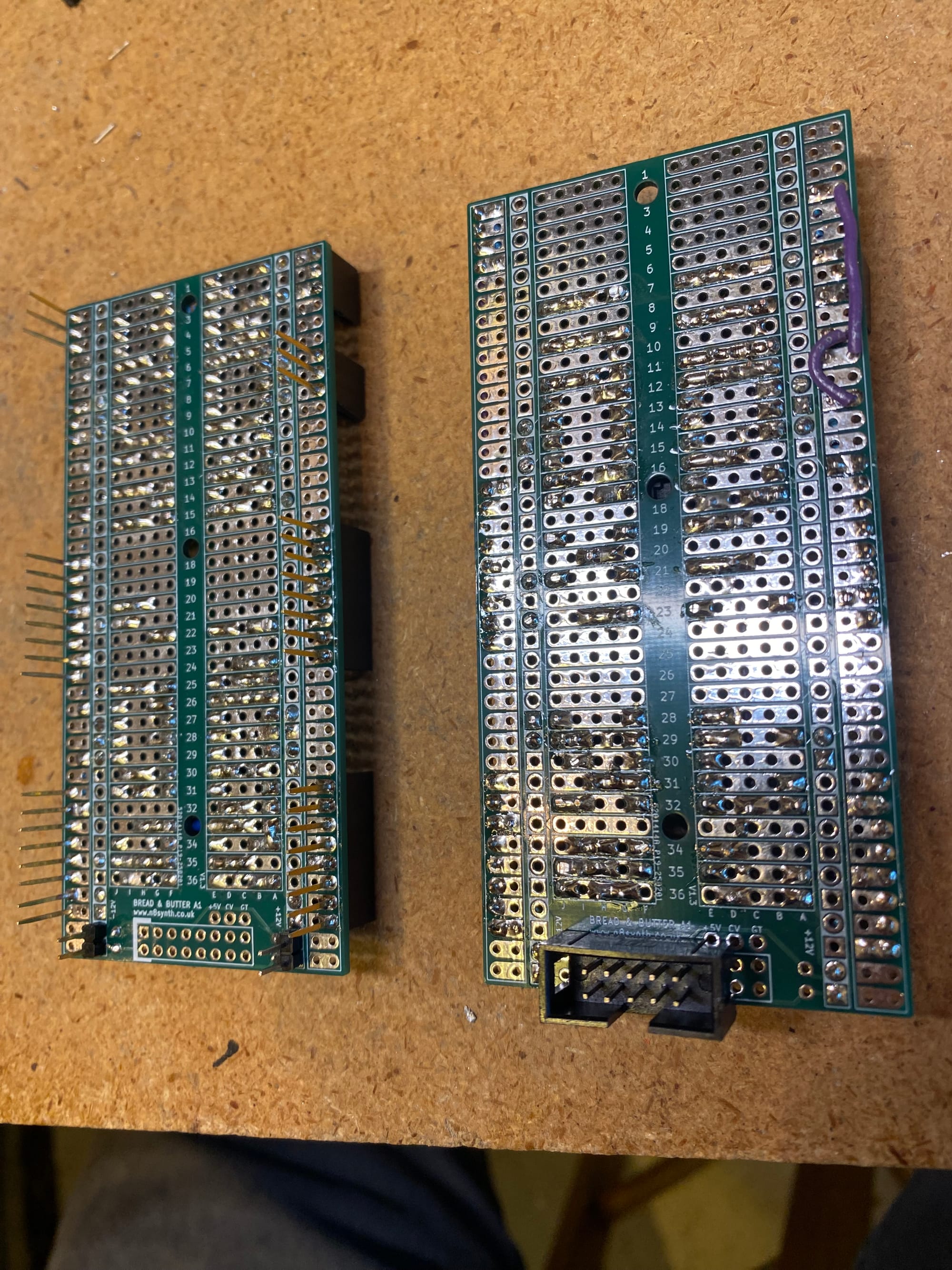
There are a few tricky wiring jumps in the Torpor and Apathy modules. I typically use the pin header pads and run longer wires on the back side of the board. With the stacked breadboards, though, I had to route the Torpor (yellow) wires on the front side. Note that the pin labels for APATHY CV and TORPOR CV are reversed on the left-hand breadboard – the actual wiring does route correctly.
Here's the N8 Synth Module Designer file:
I finally followed the advice of just about everyone who has soldered a circuit before and assembled the board in order of component height: wires first, then diodes and flat resistors, followed by DIP sockets, caps, and vertical resistors. Color-coding the wires by Sloth unit helped me keep track of the routing to the header pins.
I milled the faceplate out of 2mm 6061 aluminum. The outline edges are a little rough, and I think that was because I used a round-end corncob bit instead of the flat-end. I thought the rounded bit would lead to less binding and a cleaner cut. Next time, I’ll need to set the bottom height lower so it cuts completely theough the material.
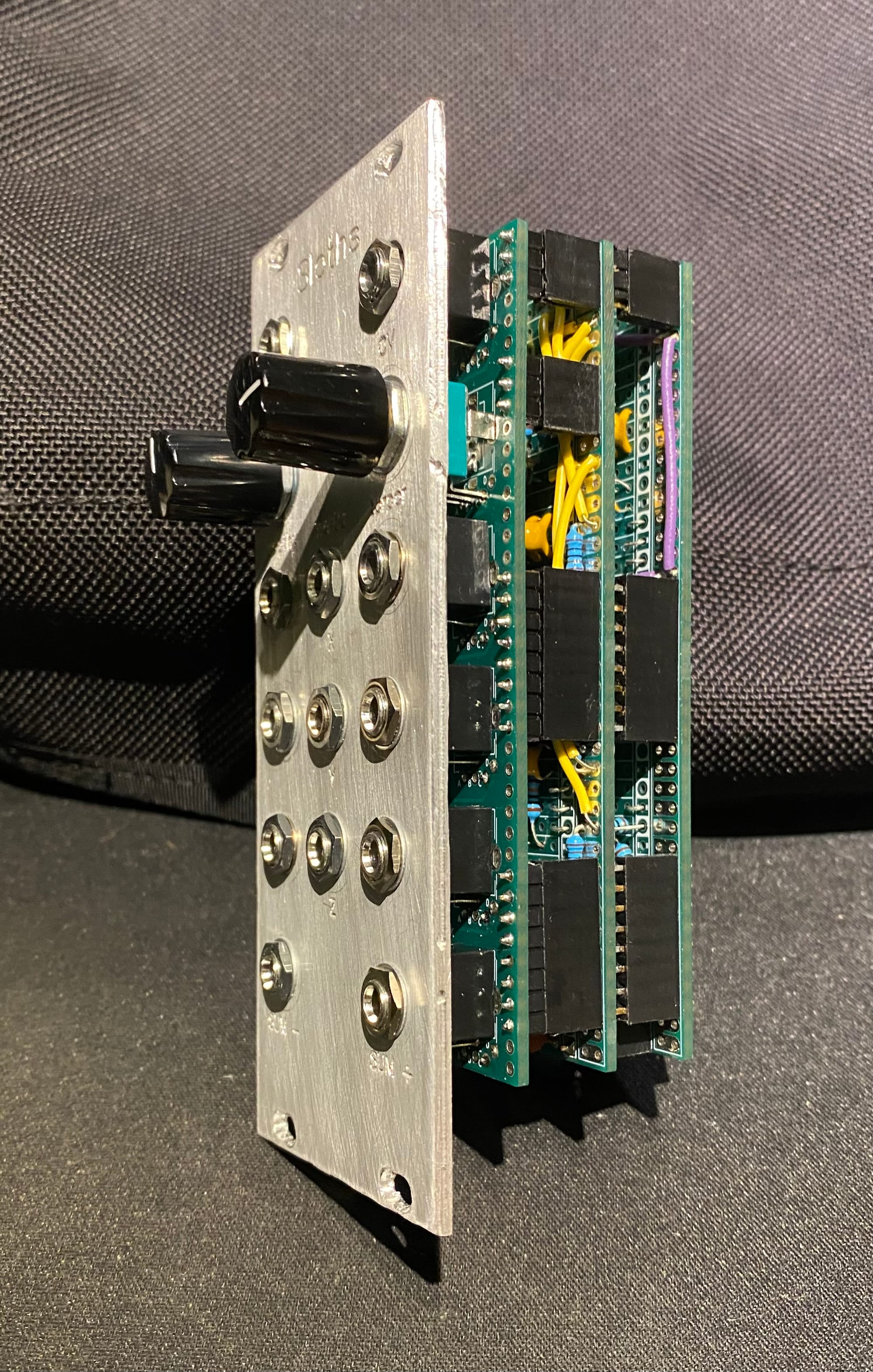
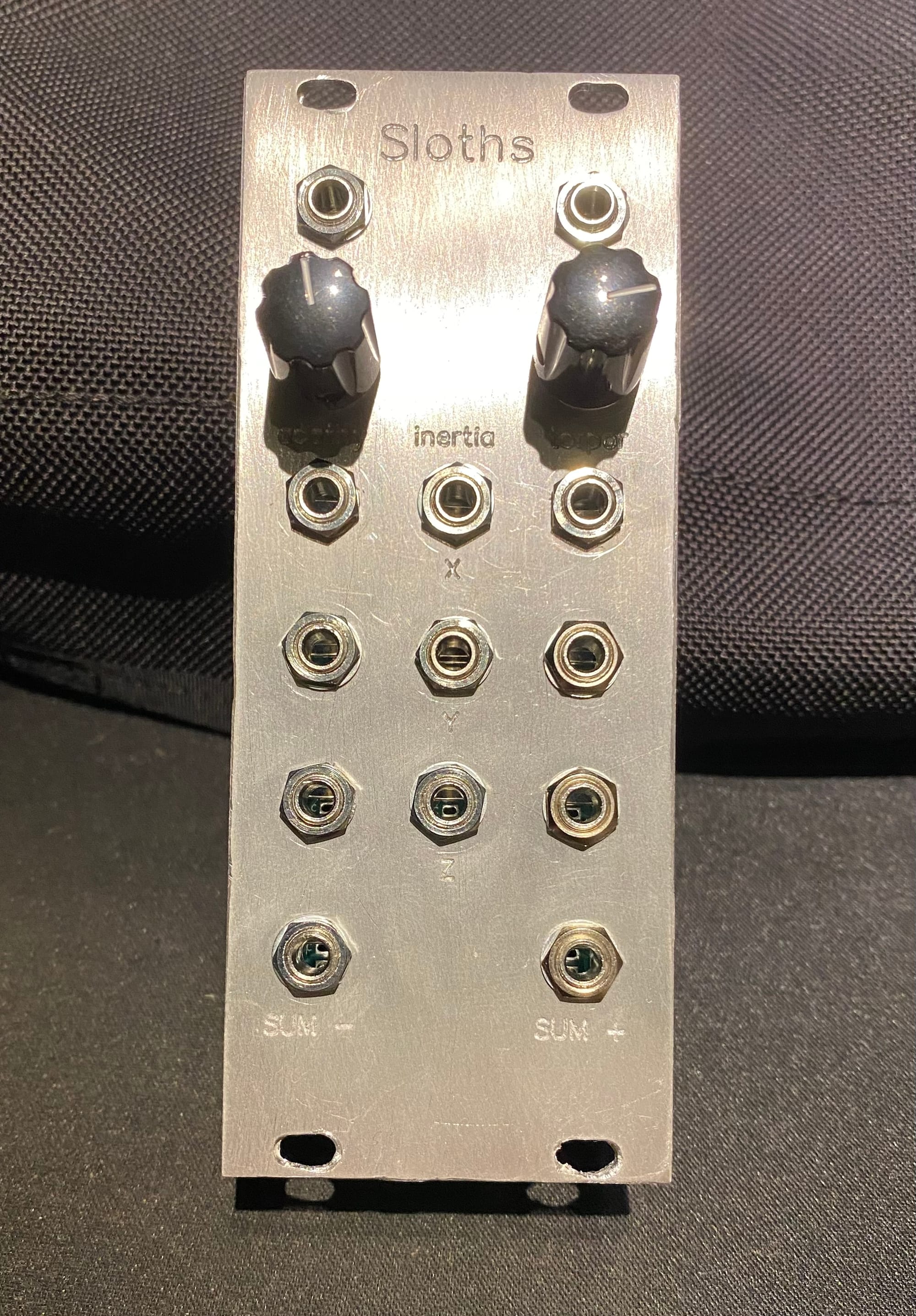
Sloths is working great in my rack, providing slow, steady modulation for my filters. Do I know what voltages any of the 11 outputs are producing at a given time? Hell no! But that's ok. Mylar Melodies said in a recent video where they demoed their performance rack, "The secret to having things that can play for longer and be tolerable is subtly modulating them a little bit." They mentioned that they feed envelopes into their filters in addition to a randomized voltage, and I've been amazed at how much this technique brings my simple little two-oscillator rack to life.
Sloths modulate...but slowly, very slowly...